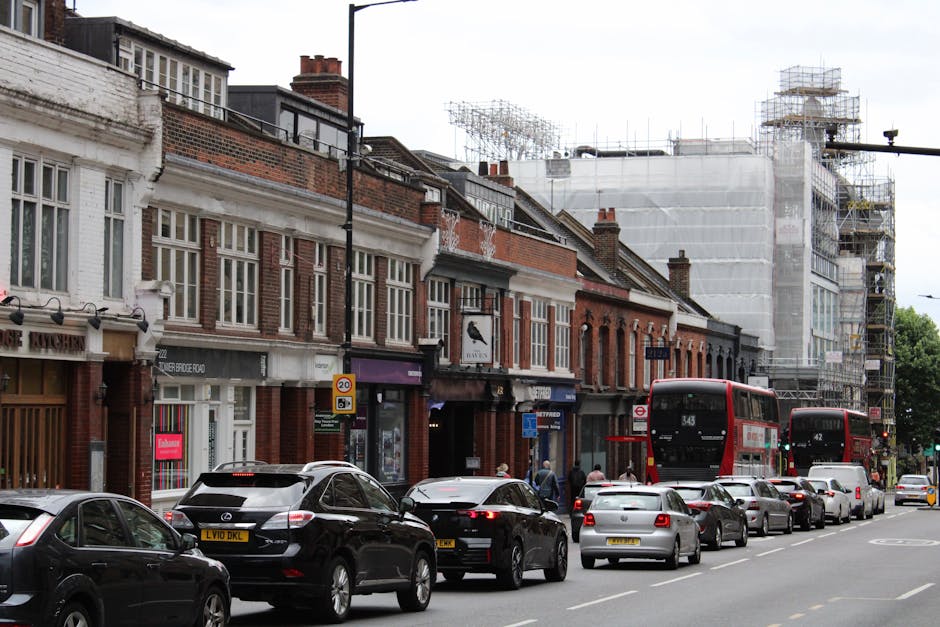
Stroud Green Road removals times and parking guide
Moving on Stroud Green Road can be straightforward, but only if you treat timing and parking as part of the move, not an afterthought. On a busy London street, one badly placed van or one awkward loading window can turn a tidy move into a long, slightly sweaty day. This Stroud Green Road removals times and parking guide brings the practical bits together: when to move, where to load, how to reduce delays, and what to do if parking is tight. If you are planning a flat move, house move, or a small office relocation, the details here will save you time and a fair bit of stress.
You'll also find a simple step-by-step plan, a checklist, a comparison table, and a realistic example of how a move on this road tends to unfold. If you are still weighing up what kind of help you need, pages like removals, flat removals, and man and van are useful starting points. And yes, parking really does matter that much. Sometimes more.
Table of Contents
- Why Stroud Green Road removals times and parking guide Matters
- How Stroud Green Road removals times and parking guide Works
- Key Benefits and Practical Advantages
- Who This Is For and When It Makes Sense
- Step-by-Step Guidance
- Expert Tips for Better Results
- Common Mistakes to Avoid
- Tools, Resources and Recommendations
- Law, Compliance, Standards, or Best Practice
- Options, Methods, or Comparison Table
- Case Study or Real-World Example
- Practical Checklist
- Conclusion
- Frequently Asked Questions
Why Stroud Green Road removals times and parking guide Matters
Stroud Green Road is the sort of place where moving well comes down to timing, not just manpower. The road carries a steady mix of local traffic, deliveries, buses, pedestrians, and the normal London background buzz that seems to appear from nowhere at 8:30 in the morning. So if your van arrives at the wrong time, you may end up waiting for a space, blocking the flow, or carrying boxes farther than you expected. None of that is ideal when you're moving a sofa down a narrow stairwell.
Parking matters because removals are rarely a quick in-and-out job. Even a small move needs enough road space for safe loading, room for door opening, and a sensible route between the property and the vehicle. If the van is positioned badly, the whole chain slows down. That's the real issue. Not just inconvenience, but extra lifting, extra time, and extra risk of damage.
Timing matters for similar reasons. A move that starts too late can collide with school runs, commuter traffic, or afternoon congestion. A move that starts too early may be fine for the road, but awkward for the property if keys are not ready. In our experience, the smoothest moves on busy London streets are the ones where the arrival window, parking plan, and loading sequence are agreed before anyone puts a box in the hallway.
Practical takeaway: the best removals plan for Stroud Green Road is not just about the vehicle. It is about matching the van size, arrival time, and parking approach to the street conditions on the day.
How Stroud Green Road removals times and parking guide Works
Think of the move in three layers: arrival time, loading time, and parking control. Each one affects the next. If the van arrives late, the packing rhythm is disrupted. If the parking spot is too far away, loading becomes slower. If the vehicle is too large for the available space, you may spend precious minutes repositioning it again and again. Not fun.
On Stroud Green Road, the best approach is to work backwards from the move-out time. First, decide when access to the property begins. Then allow time for the vehicle to arrive and settle into position. After that, build in a realistic loading period based on stairs, lift access, distance to the van, and how much furniture is involved. If you're moving from a flat, the difference between lift access and three flights of stairs is enormous. Really enormous.
Parking is usually handled through a mix of advance planning and on-the-day flexibility. For some moves, a small van or removal van can tuck in more easily than a larger truck. For others, a larger vehicle may be better because it reduces the number of trips, even if it takes a bit more effort to position. The key is choosing the setup that suits the street and the volume of items.
In practice, the move often works best if someone is ready to manage the front door while another person helps guide the vehicle in. A quick, human-style hand signal can save a lot of faffing. And yes, someone always ends up saying, "I thought that gap was bigger." It happens.
Key Benefits and Practical Advantages
Getting the timing and parking right brings a few very tangible benefits. The first is speed. If the vehicle is close to the entrance and the arrival time is sensible, loading can happen continuously instead of in stop-start bursts. That alone can shave a meaningful chunk off the day.
The second benefit is safety. Shorter carrying distances reduce strain on the team and lower the chance of scraped walls, dented furniture, or a badly judged corner turn. If you are moving heavy items, this is especially important. For bigger pieces, a service such as furniture removals or even piano removals may be worth considering because specialist handling can make a difficult street feel much more manageable.
The third benefit is neighbour relations. On a busy road, a move that is planned neatly is simply less disruptive. Nobody wants to be the person blocking access, leaving cardboard in the footpath, or creating a long queue behind the van. Keeping things efficient is courteous as well as practical.
There's also a budgeting angle. Delays caused by parking problems can increase labour time. More time means more cost. So a better parking plan often saves money indirectly, even if you spend a little time sorting it out before moving day.
- Faster loading and unloading
- Less carrying distance and less physical strain
- Reduced risk of accidental damage
- Fewer delays from traffic or parking uncertainty
- Better control over moving-day costs
Who This Is For and When It Makes Sense
This guide is useful for anyone moving on or near Stroud Green Road, but it is especially relevant if your move involves a flat, limited kerb space, or a tight time window. That covers a lot of people, to be fair. Families moving between homes, renters leaving a top-floor flat, students moving into or out of shared accommodation, and local businesses shifting stock or furniture all face the same basic challenge: get the vehicle in, get the items out, and don't make the street hate you.
If you are moving a smaller load, a man with a van or man with van setup may be enough. For larger domestic moves, house removals or a more structured home moves service may be a better fit. For commercial timing, especially where staff access or opening hours matter, commercial moves and office removals are more appropriate because they account for business disruption.
It also makes sense if you are trying to move quickly. A same-day change, key handover delay, or unexpected date shift can leave you with very little runway. In those cases, same-day removals may be the practical answer, provided access and parking are workable. Bit of a scramble, yes. But sometimes that's the situation.
Step-by-Step Guidance
Here is a simple way to plan a Stroud Green Road move without making it harder than it needs to be.
- Confirm the moving window. Work out when you can access the property, when keys are available, and whether anything on the day could delay loading.
- Estimate the load size. Count the big items, the box count, and any awkward pieces such as wardrobes, beds, mirrors, or instruments.
- Choose the right vehicle. A smaller van may be easier to park; a larger vehicle may reduce back-and-forth trips. The right answer depends on the load, not the ego.
- Check the parking picture. Look for loading space, kerb access, possible restrictions, and enough room for safe door opening and manoeuvring.
- Build in buffer time. Give yourself breathing room for traffic, stairs, lift delays, and those last few items that always seem to appear at the end.
- Prepare the property. Clear hallways, label boxes, protect floors if needed, and keep essentials separate.
- Assign simple roles. One person on doors and access, one person on box handling, one person managing the vehicle if possible.
- Unload in the right order. Put essential rooms first, then move less urgent items. That saves a lot of re-handling later.
If you need packing help before the move, pages like packing and boxes and packing and unpacking services can help you think through the prep side properly. Good packing makes parking and timing feel less fragile, oddly enough.
Expert Tips for Better Results
First tip: aim for an earlier start if the route is likely to be busy later in the day. Morning moves often feel calmer, especially on London residential streets where the traffic gradually thickens as the day goes on. There is something quietly satisfying about getting the heavy lifting done before the street gets noisy.
Second tip: keep the front door area as clear as possible. Even a tiny hallway bottleneck can slow everything down. Shoes, plant pots, umbrella stands, recycling bags - they all seem harmless until a large dresser needs to turn the corner.
Third tip: choose the vehicle based on the access point, not only the volume of belongings. A larger truck can be efficient for a full house move, but if parking is difficult, a slightly smaller vehicle may be the smarter choice. If you need more vehicle flexibility, look at moving truck or removal truck hire options.
Fourth tip: if the move includes furniture you do not want to take with you, arrange removal or disposal separately instead of trying to squeeze it into the move itself. That is where furniture pick up can be handy. One less awkward item. Sometimes that is the difference between a smooth lift and a whole lot of swearing under your breath.
Fifth tip: if you are moving to or from a flat, check stair width, lift size, and any communal access rules before the day. The road may be the headline problem, but the building can be the real puzzle.
Expert summary: The simplest way to reduce moving-day stress on Stroud Green Road is to plan the parking like a logistics problem, not a guessing game. The van, the street, and the building all need to work together.
Common Mistakes to Avoid
One common mistake is assuming you will find a convenient space the moment the van arrives. On a busy road, that is a gamble. It may pay off, but it often doesn't. Better to plan for the worst reasonable case and be pleasantly surprised than the other way around.
Another mistake is underestimating how long loading takes when the route from the property to the vehicle is awkward. Ten boxes on paper can become twenty trips in real life if the doorway is narrow or the van is a little way down the road.
People also underestimate the value of packing order. If the essentials are buried, someone ends up opening six boxes before finding the kettle. Not a disaster, but mildly irritating when you just want tea. Mark those boxes clearly and keep them accessible.
A final mistake is leaving vehicle choice too late. If you decide on the morning of the move that you need a different setup, the whole day can become more complicated. It is much easier to discuss the vehicle, access, and timing in advance, especially for house removalists or a planned removal services booking.
- Do not rely on last-minute parking luck
- Do not leave tight hallways cluttered
- Do not guess vehicle size without checking the load
- Do not pack essentials at the bottom of the pile
- Do not assume building access will be obvious on the day
Tools, Resources and Recommendations
You do not need fancy kit to move well, but a few basic tools make a noticeable difference. A trolley, protective blankets, good tape, marker pens, and sturdy boxes are the boring little heroes of the day. The less glamorous the item, often the more useful it is.
If you are not packing everything yourself, professional support can be worth it. Some people only need a vehicle and a couple of helping hands; others want a fuller service with loading, transport, and unloading built in. That is where removal services and removal companies become relevant, especially if the move is time-sensitive or involves bulky furniture.
For specific situations, the following pages are useful:
- flat removals for upper-floor access and compact loading plans
- student removals for smaller loads and budget-conscious moves
- storage if you need to split the move into stages
- furniture removals for awkward or oversized items
- pricing and quotes when you want to compare options clearly
And if you are not sure how much protection you need, it is sensible to read up on insurance and safety before moving day. A little reassurance goes a long way when there is a wardrobe in a doorway.
Law, Compliance, Standards, or Best Practice
For road-based removals in London, the main practical point is to avoid unsafe parking, blocking access, or creating unnecessary obstruction. Exact parking rules can vary depending on the street, local restrictions, and any temporary controls in place, so it is wise to check the situation in advance rather than assume. That is especially true on busier routes where loading bays, single yellow lines, or permit areas may affect the plan.
Good practice also means keeping pedestrians safe, protecting entrances, and moving items in a controlled way. On streets like Stroud Green Road, a rushed lift from van to doorway is where small accidents happen. Slow is smooth, as the saying goes. Smooth is fast. A bit cliche, but annoyingly true.
If a building has rules for access, lift use, or loading arrangements, follow them. If a vehicle needs to wait elsewhere briefly, do that rather than forcing a bad spot. When removals are handled carefully, the whole process becomes more predictable and more respectful to neighbours and the property itself.
For businesses and landlords, commercial access planning matters too. If you are moving stock, fixtures, or office furniture, office relocation services can help structure the job around opening hours and building constraints. That is usually a calmer way to do things.
Options, Methods, or Comparison Table
Choosing the right moving method is often about balancing access, volume, and speed. Here is a simple comparison to help you think it through.
| Option | Best for | Parking advantage | Potential downside |
|---|---|---|---|
| Man and van | Small to medium loads, flexible jobs | Easier to fit into tighter spaces | May need more trips if the load is large |
| Removal van | Most household moves with moderate volume | Good balance between size and manoeuvrability | Still needs careful positioning on busy streets |
| Moving truck | Larger homes or bulkier furniture sets | Can reduce trips by carrying more at once | More challenging to park and access |
| Storage plus staged move | When timings do not line up perfectly | Lets you separate access problems from volume | Extra handling and possible extra cost |
If you're moving a modest load from a flat, a smaller vehicle can feel refreshingly uncomplicated. If you're moving a full house, though, don't be tempted to undersize the job just because parking looks easier. You may end up doing too many runs. There is no medal for that.
Case Study or Real-World Example
Imagine a couple moving from a first-floor flat on Stroud Green Road to a nearby address a short drive away. They have a bed, a sofa, a dining table, around twenty boxes, and a few awkward bits from the kitchen. At first glance, it sounds like a fairly standard move. But the road is busy by mid-morning, the staircase is narrow, and the entrance space outside the building is limited.
Their best plan is simple: arrive early, park close enough for safe loading, and clear the flat before the day gets too noisy. They keep the essentials box separate, label fragile items clearly, and make sure the biggest furniture comes out first while everyone is still fresh. By lunchtime, the van is mostly loaded and they have avoided the later traffic build-up. Nothing dramatic, just good planning.
Now compare that with a version where the van arrives late, parking is uncertain, and boxes are still being taped in the hallway. That move takes longer, feels more chaotic, and risks annoying both neighbours and the movers themselves. The job is the same. The experience is not. That's why this guide exists.
For a similar situation, a house removals plan or a flexible man with a van booking can work well, depending on how much furniture and how much access pressure you're dealing with.
Practical Checklist
Use this checklist the day before and again on the morning of the move. It is simple, but it catches a lot of avoidable problems.
- Confirm the move time and access window
- Check whether parking space is likely to be available
- Decide whether you need a smaller van or a larger truck
- Keep hallways, stairs, and entrances clear
- Label fragile boxes and essentials boxes clearly
- Set aside keys, paperwork, and phone chargers
- Protect furniture edges and glass where needed
- Separate items for storage, disposal, or furniture pick up
- Notify neighbours if access may be temporarily busy
- Double-check lift use or building rules if applicable
- Have water and a quick snack to hand - sounds minor, helps a lot
Quick rule of thumb: if you can walk from front door to van without dodging clutter, you're already in good shape.
Get a free quote today and see how much you can save.
Conclusion
Stroud Green Road removals times and parking guide planning is really about making a busy London move feel controlled. When you choose the right time, allow for realistic loading, and match the vehicle to the street, everything gets easier. The move is still a move, of course. There will still be stairs, tape, and that one box nobody remembered. But the day becomes much more manageable.
If you are planning a local move, take the parking question seriously from the start, not the night before. That one habit will save time, reduce stress, and make the whole process feel less like a scramble. And honestly, that is what most people want on moving day: fewer surprises, fewer delays, and a clean finish.
Whether you need a simple van hire setup, a full household move, or something more specialised, the best result usually comes from calm planning and a sensible timeline. A little structure goes a long way. Really, it does.
Frequently Asked Questions
What is the best time of day for removals on Stroud Green Road?
Earlier is usually better because traffic tends to build as the day goes on. Morning slots often give you a cleaner loading window and less pressure from passing vehicles, pedestrians, and delivery traffic.
How do I know if my moving van will fit on the road?
It depends on the available kerb space, nearby restrictions, and the size of the vehicle. A smaller van is often easier to position, but if your load is large, a bigger vehicle may still be the better choice overall.
Do I need a permit or special parking arrangement for my move?
It may be necessary depending on the location, restrictions, or building rules. Because parking conditions can change from one stretch of road to another, it is best to check the details early rather than assume parking will be straightforward.
Is a man and van service enough for a flat on Stroud Green Road?
Often yes, especially for smaller flats or lighter loads. If you have bulky furniture, multiple rooms, or awkward access, a fuller removals service may be more practical.
How much buffer time should I allow on moving day?
Allow extra time for traffic, parking, stairs, lift delays, and loading surprises. Even a tidy move benefits from some breathing room. It keeps the day calmer, and less frantic. Which is no bad thing.
What should I do if parking is taken when the van arrives?
Have a backup plan. If possible, identify alternative loading spots nearby and keep communication open so the vehicle can reposition without wasting time. Flexibility helps a lot on busy roads.
Are weekends better for moving on Stroud Green Road?
Sometimes weekends can be easier for access, but not always. It depends on local traffic patterns, other events, and whether building access is simpler on weekdays. The right answer is the one that fits your property and route.
How can I make loading faster?
Clear the route from door to vehicle, label boxes, keep essentials separate, and load big items first. Good packing and a sensible order make a bigger difference than most people expect.
What if I need storage because my move-out and move-in dates do not match?
Using storage can take the pressure off timing and parking, especially if access on one side of the move is awkward. It is a useful option when dates are messy or delayed.
Should I choose a larger truck to reduce trips?
Sometimes yes, but only if parking and access are workable. A larger truck can save trips, but if it is difficult to position on the road, the benefit may disappear quickly.
Can removal companies help with furniture that I do not want to keep?
Yes, some moves can be paired with furniture pick up or separate furniture removals, which is useful if you want to clear space before settling into the new place.
How far in advance should I arrange my move?
The earlier the better, particularly if your move is on a busy street or involves a specific time window. Early planning gives you more choice over vehicle size, timing, and the overall moving plan.